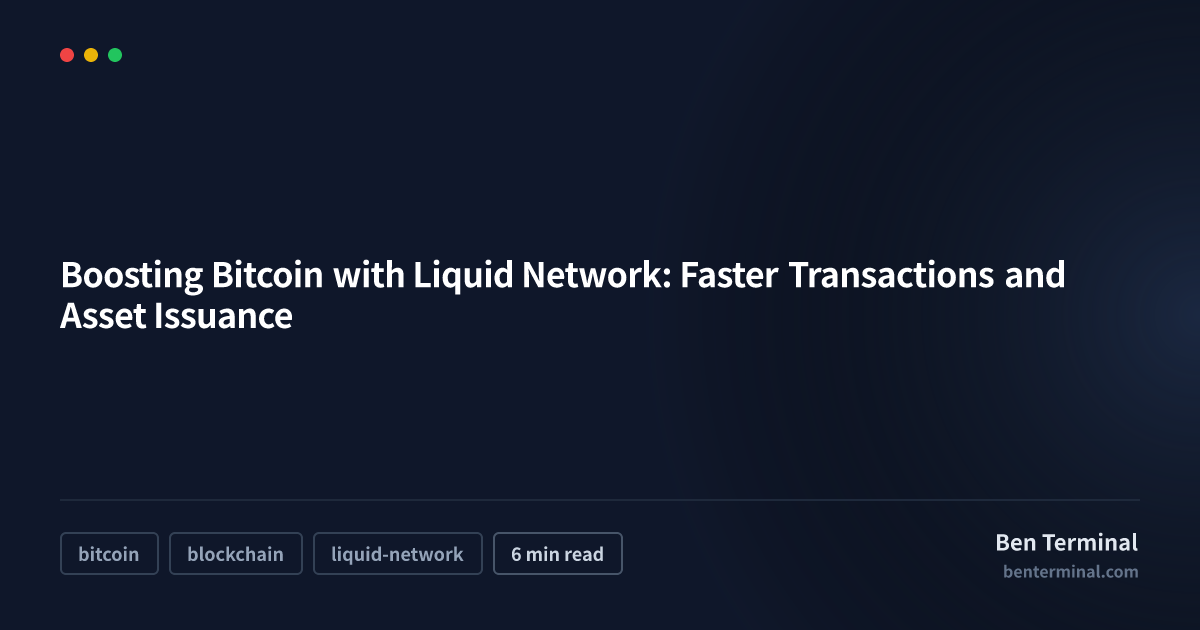
OpenClaw in Practice: lobster AI agent inside a VM cube connected to terminal and chat channels

OpenClaw in Practice: Self-Hosted AI Agent Running in 10 Minutes, Wired to Discord

A hands-on look at OpenClaw — an open-source self-hosted AI agent framework. This post walks through the full setup on an Ubuntu VM: installation, connecting to OpenAI Codex, and wiring up a Discord bot, plus observations on the architectural trade-offs and security isolation considerations.

February 25, 2026 · 2046 words · Ben
Agent Payments Protocol (AP2) architecture diagram

Agent Payments Protocol (AP2) Architecture and Implementation Guide

An in-depth exploration of AI Agent-driven payment transaction protocols, covering core concepts, Python implementation examples, verifiable digital credentials, multi-role architecture, transaction flows, and security considerations.

November 10, 2025 · 2715 words · Ben
Multi-agent system design patterns — coordinator, pipeline and iterative refinement

Multi-Agent System Design Patterns: When One AI Agent Isn't Enough

As AI Agent applications grow in complexity, single-agent architectures start showing their limitations. This article explores enterprise-grade multi-agent system design patterns, from coordinator patterns to iterative refinement, helping you build maintainable and scalable AI systems.

November 1, 2025 · 1994 words · Ben
Edge AI deployment — running GPT-4V level models on mobile devices

Edge AI: When GPT-4V-Level Models Run on Your Phone

AI doesn’t have to run in the cloud. From experience to compliance to cost, Edge AI has structural advantages across all three dimensions. This article explores why enterprises should rethink their AI deployment strategy—from business value to technical implementation.

October 31, 2025 · 2486 words · Ben
ERC-8004 Trustless Agents cross-organizational trust architecture

ERC-8004: Trustless Agents — Building Cross-Organizational Agent Discovery and Trust with Reputation + Verification

Abstract This article translates and analyzes the ERC-8004: Trustless Agents proposal (draft version), which adds a “trust layer” on top of the existing Agent-to-Agent (A2A Protocol), enabling participants to discover, select, and interact with agents in cross-organizational contexts without pre-existing trust. It introduces three lightweight and on-chain registries: Identity, Reputation, and Validation; while delegating application-level logic details to off-chain components. Original Proposal: ERC-8004 on EIPs Motivation The existing A2A Protocol already covers agent authentication, skill announcement via AgentCard, direct messaging, and complete task lifecycle collaboration. Its adoption by major tech companies demonstrates clear market demand. ...
October 19, 2025 · 1134 words · Ben

What Is DeepSeek Actually Distilling? Is the Spring of On-Device AI Finally Coming?

DeepSeek R1: What Is It Actually Distilling? There has been a lot of buzz lately about DeepSeek. It’s gotten to the point where it feels awkward not to take a closer look if you want to stay up-to-date with AI developments. After skimming the DeepSeek R1 paper, what really caught my attention was its distillation technique, which breathes new life into small models, giving them stronger reasoning abilities. In my view, this advancement is significant for future on-device AI. Because it’s open source, many organizations around the globe are attempting to replicate its results, and we can expect even better distilled models in the near future. ...

January 30, 2025 · 790 words · Ben
Liquid Network Bitcoin sidechain for faster transactions and asset issuance

Boosting Bitcoin with Liquid Network: Faster Transactions and Asset Issuance

Recently, I’ve been exploring Bitcoin network and came across an intriguing project called the Liquid Network. Developed by Blockstream, its goal is to provide instant Bitcoin transactions and support additional features. This article will introduce the basic concepts of the Liquid Network, along with its advantages and applications. Background Why Are Sidechains Necessary? Network Congestion As the number of Bitcoin users increases, so does the transaction volume. However, Bitcoin’s block size is limited, and each block can only accommodate a finite number of transactions. This leads to delays in transaction confirmations and rising fees. ...

October 5, 2024 · 1248 words · Ben

Turn noise into decisions

One email per week. No fluff. Unsubscribe anytime.